A strong storm rolls through Columbus, the power flickers, and the next morning there’s a shingle in the flower bed. You look up at the roof and notice a few spots that seem off, but you can’t tell if the storm caused them or if they’ve been there for years.
It’s one of the more common questions roofers hear in central Ohio, and the answer matters more than it seems. Wind damage to a roof is sudden and usually needs attention right away. Normal wear builds slowly and points to a different kind of plan. Mixing the two up can mean paying for a repair that won’t last, or waiting too long on damage that’s letting water in.
Oaks Roofing & Siding works with homeowners across Columbus and the surrounding area after every round of severe weather. In this blog, we’re breaking down how wind damages a roof, what normal aging looks like, the clues that help you tell them apart, and when it’s time to have a professional take a look.
Why Wind Is Hard on Columbus Roofs
Central Ohio gets a steady run of spring and summer thunderstorms, and most of the roof damage they cause comes from strong straight-line winds. The National Weather Service considers a thunderstorm severe once gusts reach 58 mph, and storms like that come through Columbus most years.
Wind doesn’t press evenly across a roof. As air moves over the house, it creates lift along the edges, corners, and ridge, the same way air lifts an airplane wing. That’s why wind damage usually starts at the perimeter of the roof and works its way inward.
Many Columbus neighborhoods also have mature trees, and older homes around the area often sit under big canopies. Falling limbs and flying debris add another layer of risk on top of the wind itself.
How Wind Damages Asphalt Shingles
Asphalt shingles are held down two ways. Nails secure the top of each shingle, and a strip of adhesive along the underside bonds each shingle to the one below it. That adhesive seal is what keeps the bottom edge flat against the roof.
When a strong gust gets under a shingle edge, it can break that seal. Once the seal lets go, the shingle can flap up and down in the wind. Each lift bends the shingle near the nail line, and enough of that bending can tear the shingle loose or pull it right off the roof. Even when the shingle settles back into place, the broken seal leaves wind-damaged shingles vulnerable to the next storm.
Signs of Wind Damage to Your Roof
You can spot most wind damage from the ground with a pair of binoculars. Here’s what our team looks for after a storm.
- Missing shingles - Gaps in the roof surface, especially along edges, corners, and the ridge, are the clearest sign of wind damage. The shingles themselves often turn up in the yard or the gutters.
- Creased shingles - A straight horizontal line across a shingle, usually near the top, means the wind lifted it far enough to fold it back. Creased shingles can look flat from the street but are no longer properly sealed.
- Lifted shingles - Shingle edges that stick up or don’t lie flat after a storm have likely lost their adhesive seal.
- Exposed nails or underlayment - When shingles shift or tear, you may see shiny nail heads, the black underlayment, or bare roof deck where shingles used to be.
- Damaged ridge caps - The shingles along the peak take the most wind, so cracked, loose, or missing ridge caps are common after a strong storm.
- Peeled flashing or drip edge - Metal along the roof edge or around vents can bend or pull away when wind gets underneath it.
- Debris on the roof - Branches, limbs, and other debris can scrape shingles, knock granules loose, or puncture the roof outright.
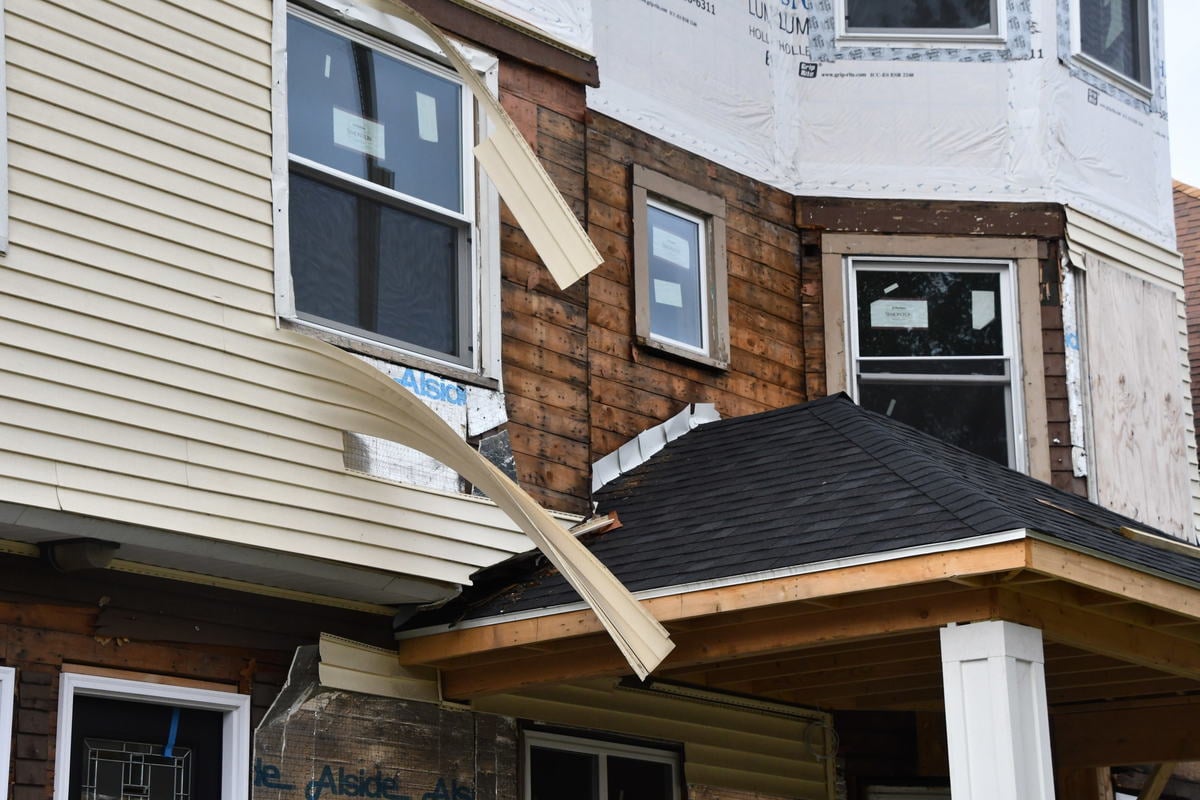
- Damage to gutters and siding - Bent gutters, loose downspouts, and cracked or missing siding panels on the side of the house that faced the storm usually means the roof took a hit too.
What Normal Roof Wear Looks Like
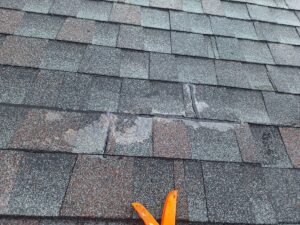
Every roof ages, and most of that aging is predictable. An asphalt shingle roof in central Ohio typically lasts around 20 to 25 years, and wear tends to show up in the same few ways as it gets older.
- Even granule loss across the roof - Shingles shed granules slowly over their lifespan. On an older roof, the surface looks thin and faded across whole sections rather than in scattered spots.
- Curling or cupping over a wide area - As shingles dry out, their edges turn up or their centers dip. On an aging roof, this shows up across an entire slope rather than at the edges alone.
- Cracking from age - Shingles that have lost their flexibility develop small cracks, usually spread throughout the roof.
- Faded color and dark streaks - Sun fades shingles over time, and dark streaks from algae are common on slopes that stay shaded or damp.
- More wear on sunny slopes - South and west-facing slopes take the most sun, so they usually age faster than the rest of the roof.
Normal wear happens gradually, across large areas, and on every roof eventually. Wind damage shows up after a specific storm, in specific spots.
Five Clues That Help You Tell Them Apart
When you’re looking at a roof that has both age and a recent storm behind it, these clues usually point in the right direction.
- Pattern - Wind damage is concentrated and uneven. You might see a cluster of missing shingles near one corner while the rest of the roof looks fine. Wear is spread evenly across whole slopes.
- Location - Wind damage usually starts at edges, corners, rakes, and the ridge, and it’s often worse on the side of the house that faced the storm. Wear shows up wherever the sun and weather hit hardest over the years.
- Timing - If the problem wasn’t there before the storm and is there now, wind is the likely cause. Wear develops over months and years.
- The crease - A sharp horizontal fold across a shingle is a strong sign of wind. Age causes curling and cracking, but it doesn’t leave a clean crease line.
- Fresh versus weathered damage - Torn shingle edges, bright exposed nail heads, and clean, uncovered patches of underlayment look new. Damage from age looks weathered and worn in.
Photos help a lot here. If you took pictures of your roof before the storm, or have an older inspection report, comparing the two can make the answer clear quickly.
When Wind Finds a Roof That Was Already Worn
Many roofs have both. An older roof with dried-out shingles and weakened adhesive seals is far more likely to lose shingles in a storm than a newer one. In those cases, the wind did the damage, but the age of the roof made it easier.
That combination matters for your next step. A younger roof with storm damage on one slope usually just needs that section fixed. An older roof that lost shingles in several places may have reached the point where patching won’t hold through the next storm. A professional inspection can tell you how much of what you’re seeing came from the wind and how much from time.
It can also matter for your insurance. Many homeowners' policies treat sudden storm damage differently from wear and tear, so knowing which one you’re dealing with is worth finding out before you file anything. Your policy and your agent are the best sources for what’s covered.
What to Do After a Windstorm in Columbus
Once the storm has passed and it’s safe to go outside, start with a slow walk around the house. Look for downed lines, fallen limbs, and shingles or pieces of siding in the yard. Check ceilings and the attic for fresh water stains.
Take photos of anything you find, along with the date of the storm. Stay off the roof, since wind-damaged shingles can slide out from under you and loose debris makes footing dangerous. If shingles are missing or water is coming in, call a roofing professional to cover the area until it can be repaired.
Wind Damage Roof Repair or Replacement?
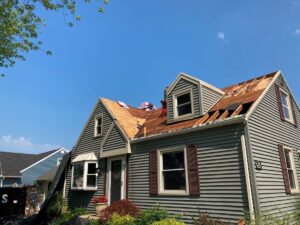
Most wind damage on a roof in good condition can be handled with a targeted roof repair. Replacing missing or creased shingles, resealing lifted edges, and refastening flashing can restore the roof without touching the rest of it. If you’re unsure where to start, our storm damage roof repair team can walk you through it.
A roof replacement may make more sense when wind damage is spread across several slopes, when the roof was already near the end of its lifespan, or when your shingle color has been discontinued and repairs won’t match. If a new roof is on the table, it’s also a good time to look at roofing materials built to handle more wind, including architectural shingles with higher wind ratings and steel standing seam metal. Many architectural shingles carry wind warranties well above 100 mph when installed to the manufacturer’s specifications, and correct installation plays a big part in how well any roof holds up. Financing options can help you move forward on a replacement without waiting for the next storm.
Wind Damage Inspections in Columbus, OH
For over 20 years, Oaks Roofing & Siding has helped homeowners across the Northeast and Ohio protect what’s over their heads. Our licensed and insured team inspects your roof, gutters, siding, and windows in one visit, documents what we find with photos, and tells you plainly whether you’re looking at storm damage, normal wear, or a bit of both. From a few creased shingles to a full replacement, we handle roof repair in Columbus, Ohio and the surrounding area.
If your roof came through the storm in good shape, we’ll tell you that too. When work does make sense, you’ll get a clear estimate before anything begins.
Schedule Your Roof Inspection in Columbus, OH
Noticed missing shingles or lifted edges after the last storm? Our roofers in Columbus, OH can tell you what you’re looking at. Call 380-246-6257 or request an estimate to get on the schedule before winter weather moves in.
Oaks Roofing & Siding: Quality You Can Trust
At Oaks Roofing & Siding, we offer various dumpster sizes to meet your needs. Our dedicated representatives are always here to answer questions so your rental process goes smoothly. Call or contact us today, and we'll be happy to help.