Erie homeowners get every season at full strength. Lake-effect snow buries the city through the heart of winter, spring brings snowmelt and soggy yards, summer turns humid along the lake, and fall winds strip the trees bare in a matter of weeks. Each season puts a different kind of stress on your roof, siding, and gutters.
Most exterior problems start small, and they’re far easier to catch when you know what to look for and when to look. That’s where a home maintenance calendar comes in. Instead of trying to tackle everything in one weekend, you spread a few quick checks across the year and time each one to the weather that causes the most wear.
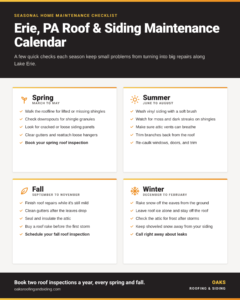
This roof maintenance checklist breaks the year into four seasons, with the roof, siding, and gutter maintenance tasks that matter most in each one for homes in Erie and the surrounding area.
Why Seasonal Roof Maintenance Matters in Erie, PA
Living along Lake Erie shapes how a house ages. Erie averages about 104 inches of snow a season, according to the National Weather Service, and most of it falls from December through February.
Lake-effect snow hits hardest before the lake freezes over. Lake Erie is the shallowest of the Great Lakes, so in a cold winter it can freeze over almost completely, which usually slows the snow by late winter. In milder years, open water keeps it coming well into February. Either way, the freeze-thaw cycles continue into spring, and every thaw and refreeze gives melting snow another chance to work into a loose shingle edge or an open seam.
Then the cycle flips. Snowmelt and spring showers put your gutters and flashing to the test, summer heat and humidity wear on shingles and shaded siding, and fall drops a season’s worth of leaves into your gutters right before the snow returns. Following a seasonal home maintenance checklist keeps you a step ahead of whatever the next season brings.
Spring Roof and Siding Maintenance Checklist (March to May)

Spring is when you find out what winter did. Once the snow is gone and the last hard freeze has passed, it’s time for a careful walk around the whole house.
Roof
- Walk the roofline from the ground - Look for shingles that are lifted, cracked, or missing, especially along the edges and on the side of the house that takes the most wind.
- Check the downspouts for granules - If the splash block at the bottom of a downspout is collecting dark, gritty granules after a rain, the shingles above are losing their protective surface.
- Look at the flashing - Check where the roof meets vents, skylights, and walls. Months of snow and ice can loosen flashing and crack the sealant around it.
- Check the attic after the snowmelt - Water stains on the roof boards, damp insulation, or a musty smell are often the first signs of a leak that started under the snow.
- Book your spring roof inspection - Most roofing professionals recommend a full inspection twice a year, and spring is the first one. Roofing schedules fill up quickly as the weather warms, so it pays to call early.
Siding and Gutters
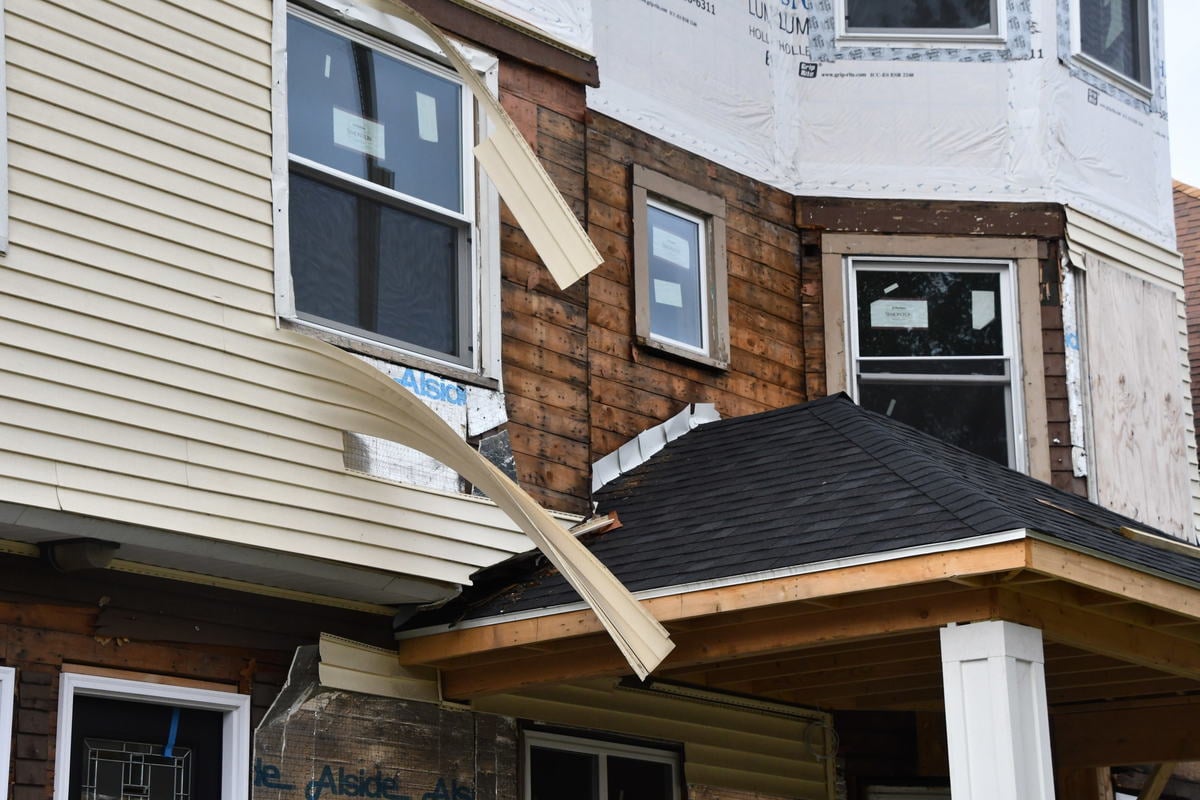
- Look for winter impact damage - Vinyl siding gets more brittle in cold weather, and chunks of ice from a snowblower, a plow, or a falling icicle can crack it. Start with the walls nearest your driveway and walkways.
- Check for buckled or loose panels - Panels that pulled loose in the winter wind or no longer sit flat can let water get behind the wall.
- Inspect the trim around windows and doors - Gaps in the trim and the channels around openings are one of the most common ways for spring rain to get in.
- Clear and secure your gutters - Remove debris left over from winter and reattach any hangers that loosened under the weight of ice. If sections are bent or pulling away from the fascia, it may be time for a gutter repair or replacement.
- Make sure downspouts drain away from the house - Snowmelt and spring showers add up quickly, and water dumped next to the foundation can find its way into the basement. Extensions or splash blocks that carry water a few feet out make a big difference.
Summer Roof and Siding Maintenance in Erie (June to August)

Long, mild summer days along the lake are the most comfortable time of year to work outside, which makes summer the best season for cleaning and small upkeep projects.
Vinyl Siding Maintenance and Cleaning
A yearly wash is the core of vinyl siding maintenance, and summer is the easiest time to do it. Dirt, pollen, and road grime build up over the year, and walls that stay shaded give mildew a head start.
- Start gentle - A soft-bristle brush or cloth with mild soap and water handles most dirt. Abrasive scrubbers can scratch the finish.
- Wash from the bottom up - Starting low keeps dirty water from running over dry siding and leaving streaks. Give each section a thorough rinse before moving on.
- Read your care guide before using a pressure washer - Some siding manufacturers advise against pressure washers entirely, while others allow them on a low setting. Spraying up under the bottom edge of a panel is the quickest way to push water behind it, so keep the nozzle away from the seams.
- Follow the manufacturer’s instructions - Many siding brands have specific guidance on cleaners, and following it helps protect your warranty.
While you’re washing, pay extra attention to the north side of the house and any walls under trees. Those spots stay damp the longest.
Roof
- Keep an eye on dark streaks and moss - Dark streaks on shingles are usually algae and are mostly cosmetic. Moss is a bigger concern, since it holds moisture against the roof and can lift shingle edges over time. Skip the pressure washer on your roof, which can strip granules from the shingles.
- Check your attic ventilation - Hot, stagnant attic air ages shingles from the underside. On a warm afternoon, make sure soffit vents aren’t buried under insulation or blocked by stored boxes, and that air has a way out near the ridge.
- Trim back overhanging branches - Summer is a good time to cut back limbs that rest on or hang over the roof before fall winds and heavy winter snow put weight on them. For large limbs, a professional tree service is the safer call.
Caulk and Seams
Look over the caulk around windows, doors, and anywhere siding meets trim. If it’s cracked or pulling away, summer and early fall are good times to replace it, since most exterior sealants cure best in mild, dry weather. Check the product label for the temperature range it needs.
Fall Roof and Gutter Maintenance Before Lake-Effect Season (September to November)
Fall is your last window to get the house ready before the snow arrives. The goal is to wrap up anything that needs warm weather and make sure water can move freely off the roof.
- Wrap up roof repairs while it’s still mild - New shingles need a stretch of warm, sunny days for their adhesive strips to bond. A repair made in September or early October has a much better chance of sealing tightly than one made after the cold sets in.
- Clean gutters after the leaves drop - Homes with a lot of trees may need two rounds, one in early fall and another once the last leaves come down.
- Tighten loose gutter hangers - Wet snow and ice add serious weight to a gutter run. A hanger that’s loose in October can mean a section on the ground in January.
- Seal and insulate the attic - Warm air leaking up from your living space melts snow on the roof, and that water can refreeze along the colder eaves. A cold, well-ventilated attic is one of the best defenses against ice buildup. If ice has been a problem at your house before, our team also handles ice dam removal.
- Buy a roof rake now - A roof rake lets you pull snow off the lower part of the roof from the ground, and stores tend to sell out once the first big storm is in the forecast.
- Schedule your fall roof inspection - This is the second of the two yearly inspections, and it’s the one that sets your roof up for lake-effect season.
Winter Roof Maintenance for Erie Homes (December to February)
Winter maintenance is mostly about watching closely and reacting safely. You won’t be making repairs on the roof yourself, but a few habits go a long way when the snow keeps coming.
- Rake the eaves after big storms - After a heavy lake-effect storm, use a roof rake to clear the bottom few feet of snow while you stay on the ground. Work in short, light passes and leave a thin layer behind so the rake never scrapes the shingles.
- Leave the ice alone - Hammering or shoveling at ice on the roof does more damage to shingles and gutters than the ice itself, and a snowy roof is no place to stand.
- Check the attic after storms and thaws - Frosty nail tips or a white coating on the underside of the roof boards are signs that warm, damp air from the house is leaking upward.
- Keep snow off the siding - Snow that sits against the house for weeks holds moisture on the bottom rows of siding. Pile shoveled snow away from the walls, and aim the snowblower chute away from the house, since chunks of ice can crack cold vinyl.
- Watch the eaves - A ridge of ice building along the roof edge, or icicles that keep getting thicker, usually means water is pooling behind it. That’s worth a call.
- Call right away about leaks - Active leaks and storm damage can’t wait for spring, and they don’t have to. Call as soon as you see water inside.
What Erie Homeowners Can Handle and When to Call a Roofing Contractor
A lot of this calendar is homeowner-friendly. Looking over the roof with binoculars, rinsing siding, cleaning out gutters you can reach from a short ladder, and checking the attic with a flashlight are all fair game.
The roof surface is a different story. Foot traffic can crack or scuff shingles, and Erie roofs spend much of the year wet, frosty, or covered in leaves. Flashing work, tracing a leak back to where it starts, and spotting storm bruising on shingles are jobs for a trained roofer with the right safety gear.
Pay attention to patterns, too. If every seasonal check turns up the same issues, like leaks that keep coming back, shingle damage on more than one slope, or siding that cracks and warps faster than you can patch it, your roof or siding may be near the end of its life. A professional can tell you whether a roof repair will hold or whether a roof replacement or new siding is the better investment.
Why Erie Homeowners Choose Oaks Roofing & Siding
For over 20 years, Oaks Roofing & Siding has repaired and replaced roofs and siding for homeowners across New York, Ohio, and Pennsylvania. Our Erie team brings that experience to homes throughout Erie and the surrounding area.
As roofing contractors in Erie, PA who also handle siding, gutters, and window replacement, our licensed and insured team can cover your whole exterior in one visit. We’ll walk you through what we find, explain your options, and give you a clear estimate before any work begins. When a bigger project makes sense, flexible financing can help you move forward on your timeline.
Schedule Your Free Roof Estimate in Erie, PA
Whether it’s time for your spring inspection or something caught your eye during this season’s walk-around, our team is ready to help. Call our Erie team at 814-584-6257 or request your free estimate to talk with roofers in Erie, PA who know what a year along the lake does to a home.
Oaks Roofing & Siding: Quality You Can Trust
At Oaks Roofing & Siding, we offer various dumpster sizes to meet your needs. Our dedicated representatives are always here to answer questions so your rental process goes smoothly. Call or contact us today, and we'll be happy to help.